
Enterprise AI systems have shifted from single-provider or cloud-only models to hybrid architectures that balance scalability, security, low latency, and data sovereignty. This shift is now a strategic necessity for regulatory compliance, cost efficiency, and operational control.
Designing Hybrid AI Architectures with Microsoft Foundry, Copilot and Local LLMs
Enterprise AI systems have undergone a fundamental transformation. Organizations no longer want to depend on a single model provider or solely cloud-based solutions. Instead, they are shifting toward hybrid architectures that can simultaneously meet critical requirements such as scalability, security, low latency and data sovereignty.
This approach is not just a technical preference; it has become a strategic necessity in terms of regulatory compliance, cost optimization and operational control.
Microsoft Foundry and M365 Copilot Ecosystem
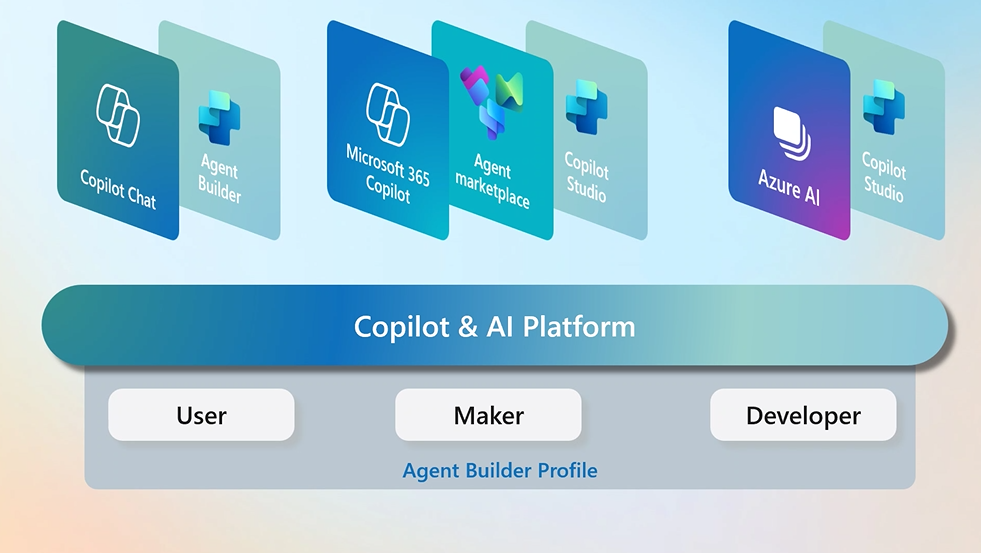
At the center of Microsoft’s enterprise AI vision are Microsoft Foundry and the M365 Copilot ecosystem. These platforms provide an end-to-end infrastructure for integrating large language models (LLMs) into business processes.
Key Advantages
- Native integration with Microsoft 365, Dynamics 365 and Azure services
- Access to up-to-date language models
- Customizable business assistants via Copilot Studio and Microsoft Foundry
- Agent-based architecture that can connect to enterprise data sources
With this setup, processes such as customer service, internal operations and knowledge management can be rapidly enhanced with AI.
Local Language Models (On-Premise LLMs)
The advancement of open-source models has created a strong alternative in enterprise architectures. Models like LLaMA, Mistral and their derivatives can now run efficiently within on-premise infrastructures.
Core Advantages
- Data sovereignty: Data never leaves the organization
- Low latency: Eliminates network dependency
- Customization: Models can be fine-tuned with enterprise data
- Regulatory compliance: Easier alignment with standards like GDPR or KVKK
Technologies Used
- Ollama → fast model execution and prototyping
- vLLM → high throughput and GPU efficiency
- TensorRT-LLM → optimized low-latency inference
These tools have made local deployment far more accessible than before.
Hybrid Architecture & Intelligent Routing
Hybrid Architecture
Modern enterprise AI systems are now built on hybrid architectures. In this approach:
- Sensitive and critical tasks → handled by local models
- General-purpose and large-scale tasks → handled by cloud models
Routing Layer
At the core of this architecture lies the routing mechanism. The system analyzes incoming requests based on:
- Data sensitivity
- Latency requirements
- Cost impact
and routes them to the most appropriate model.
Example Scenario
In a financial institution:
- Customer support chatbot → Cloud LLM (Copilot / OpenAI API)
- Credit scoring and risk analysis → Local LLM / ML models
This separation improves both security and cost efficiency.
Architectural Design Principles
A successful hybrid AI system balances four key dimensions:
- Scalability
Cloud infrastructure adapts dynamically to fluctuating workloads. - Security
Local models prevent sensitive data from being sent to external systems. - Latency
On-prem deployment provides millisecond-level advantages for real-time applications. - Data Control
Full control of the data lifecycle within the organization is a long-term strategic asset.
Hybrid AI architectures must be designed not only for performance and cost efficiency but also to meet AI governance requirements.
Azure OpenAI: A New Era of Enterprise Transformation
Azure OpenAI is redefining the digital transformation journey for organizations. AI-powered solutions make business processes more efficient, strengthen data-driven decision-making capabilities, and elevate the customer experience to a new level. With its secure and scalable infrastructure, Azure OpenAI helps companies gain a competitive advantage in the rapidly changing business world. In this new era, organizations not only adapt to technology but also become players shaping the future.