
What cloud security posture management actually means, why traditional approaches are failing, and how to start thinking about it strategically.

The Problem No Dashboard Is Solving
Most organizations operating in the cloud today have more security visibility than ever before and yet more cloud-related breaches than ever before. This is not a contradiction. It is the defining paradox of modern cloud security.
The visibility organizations have accumulated is fragmented. Security teams are looking at separate dashboards for AWS, Azure and Google Cloud. DevOps teams are running their own pipeline security tools. Identity teams are managing access policies in isolation. And somewhere in between all of these systems, attackers are finding the paths that no single tool is designed to see.
This is the problem that Cloud Security Posture Management (CSPM) exists to solve. Not more alerts. Not more dashboards. A unified, contextual understanding of risk across the entire cloud environment, from the first line of infrastructure code to the running workloads in production.
For CISO’s and security leaders, understanding CSPM is no longer optional. It is the foundational capability that determines whether a security program can keep pace with the speed and complexity of modern cloud operations.
Why Multicloud Makes Everything Harder
The multicloud reality is not a choice most organizations made deliberately. It evolved through acquisitions, through teams adopting the best tool for a specific job, through strategic decisions to avoid vendor lock-in. Today, nearly all organizations using public cloud are running workloads across multiple providers simultaneously.
The security implications are significant. Each cloud platform has its own identity and access model, it’s own compliance framework, it’s own native security tooling, and it’s own terminology. A security misconfiguration in AWS looks different from the same misconfiguration in Azure. An overprivileged identity in Google Cloud may create a risk that only becomes apparent when combined with an exposed resource in Azure.
The statistics reflect the severity of the challenge. Research indicates that 65% of code repositories contain source code vulnerabilities. Across multicloud environments, 84% of attack paths are a direct result of internet exposure and 49% of those paths lead directly to data exposure. These are not edge cases. They are structural features of how modern cloud environments are built and operated.
Traditional security approaches perimeter-focused, vendor-specific, manually reviewed are architecturally incapable of addressing this reality. The environments are too dynamic, too distributed, and too interconnected for human-scale manual oversight.
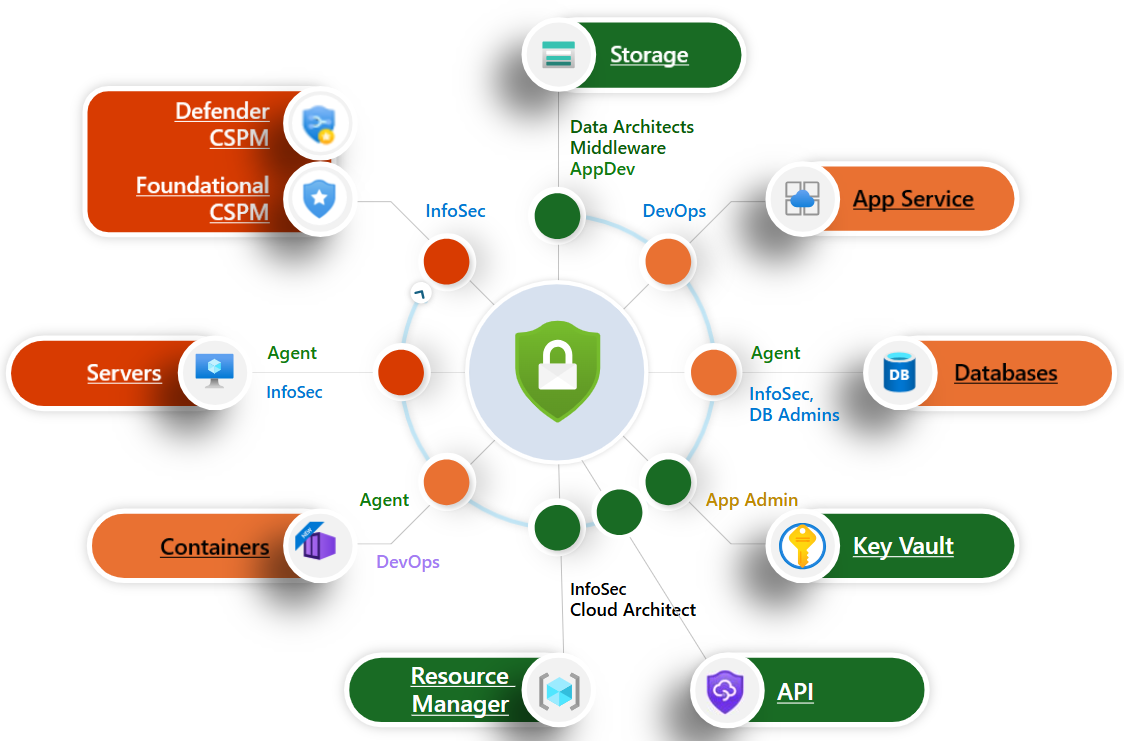
What CSPM Actually Does
Cloud Security Posture Management is a discipline and a category of tooling designed to provide continuous, automated assessment of cloud security configurations across multiple environments.
At it’s most basic level, CSPM does three things:
It discovers. CSPM continuously inventories cloud assets virtual machines, containers, databases, storage accounts, identity configurations, network rules, API endpoints across every connected cloud environment. It knows what exists, where it exists and how it is configured.
It assesses. Against that inventory, CSPM evaluates every asset against security standards industry benchmarks like CIS, regulatory frameworks like NIST, HIPAA, PCI DSS and ISO 27001, as well as custom organizational policies. The result is a continuous, up-to-date view of compliance posture across the entire estate.
It prioritizes. This is where modern CSPM diverges from earlier generations of security tooling. Rather than generating undifferentiated lists of findings the classic “here are 50,000 security recommendations” problem advanced CSPM applies contextual risk intelligence to identify which findings actually matter.
That last capability is the one that transforms CSPM from a compliance tool into a strategic security asset.
The Prioritization Problem & How CSPM Solves It
Security teams are drowning in alerts. The typical large enterprise cloud environment generates thousands of security findings per day. No team can investigate thousands of findings per day. The result is a triage backlog that grows faster than it can be cleared and a security program that is perpetually reactive rather than strategically proactive.
The root cause of this problem is that most security tools treat all findings as roughly equivalent in importance. A storage bucket with public read access and a virtual machine missing a patch are both “high severity” findings. But one of them might be protecting intellectual property accessible directly from the internet via an active exploit path. The other might be a test environment with no sensitive data and no internet exposure. These are not equivalent risks.
Modern CSPM resolves this by calculating risk scores based on multiple contextual factors simultaneously:
Internet exposure, Is the affected resource directly reachable from the public internet? Internet-exposed resources are dramatically more likely to be targeted and compromised.
Exploitability, Does the vulnerability have known, weaponized exploits? Is there active exploitation in the wild?
Business impact, Is this resource designated as business-critical? Does it host or have access to sensitive data? Is it part of a revenue-generating system?
Lateral movement potential, If this resource were compromised, what else could an attacker reach? Does it have excessive permissions that would enable movement to other systems?
Sensitive data proximity, Does the resource contain or have access to personally identifiable information, financial records, intellectual property or other high-value data categories?
By combining these factors, CSPM generates a contextualized risk score that enables security teams to focus attention where it genuinely matters on the handful of findings that represent real, exploitable paths to significant harm.
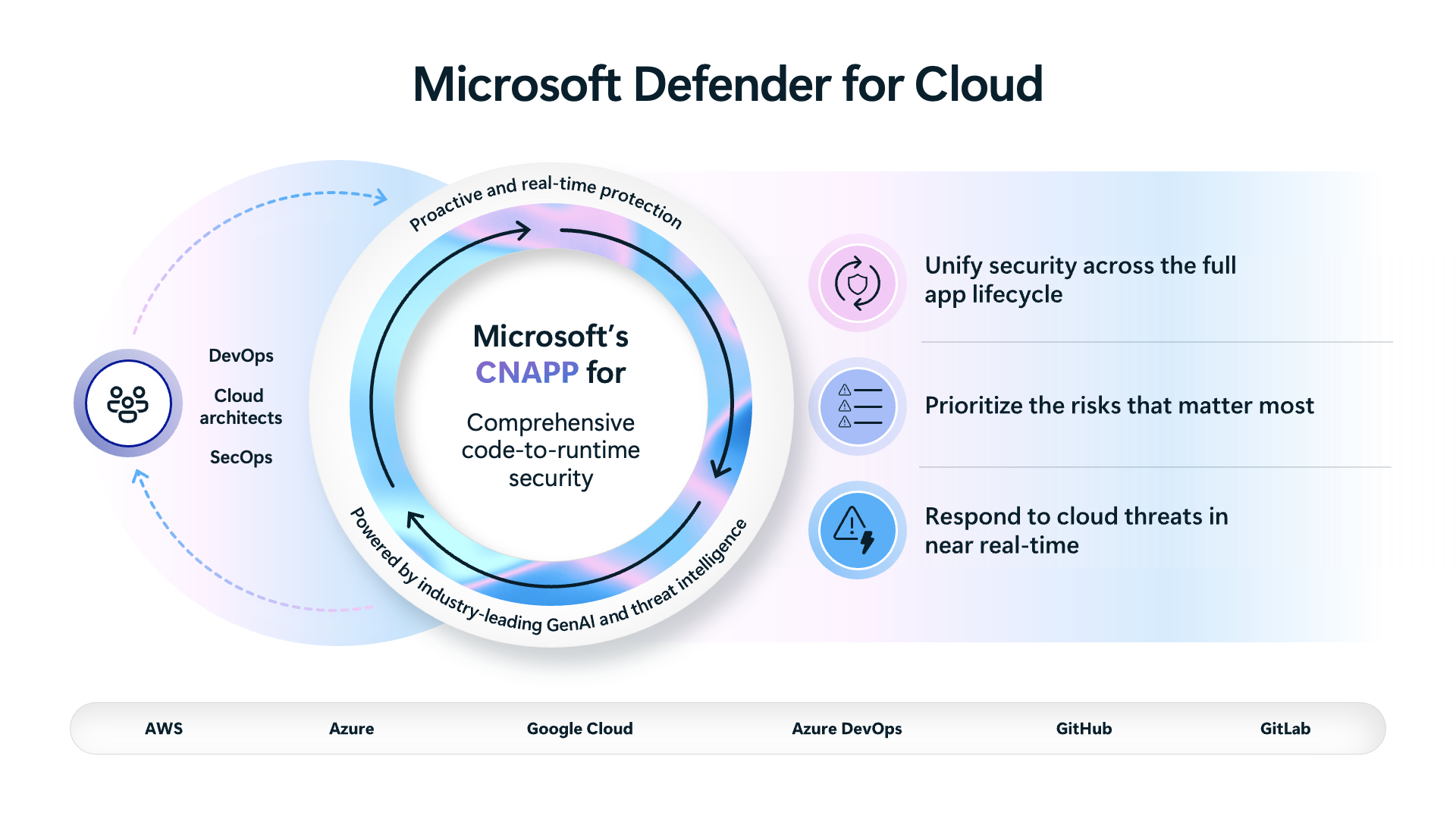
Microsoft Defender CSPM, for example, offers 450-plus out-of-the-box security recommendations across Azure, AWS and Google Cloud environments. Without prioritization, that volume would be paralyzing. With contextual risk scoring, teams can focus on the dozen or so critical-severity findings that represent genuine attack paths, while managing medium and low findings through governance processes at a more measured pace.
Attack Path Analysis: Seeing What Attackers See
The most transformative capability in modern CSPM is attack path analysis. It represents a fundamental shift in how security teams think about cloud risk from a configuration-centric view to an attacker-centric view.
Traditional security assessment asks: “Which of our resources have security findings?” Attack path analysis asks a different question: “Given our current configuration, what sequence of steps could an attacker take to reach our most valuable assets?”
These are profoundly different questions and they lead to profoundly different prioritization decisions.
Consider a simplified example. An organization has a virtual machine with a known remote code execution vulnerability. In isolation, that is a high-severity finding requiring remediation. But is it the most urgent finding in the environment?
Attack path analysis answers this by examining the full context. If that virtual machine has a managed identity with excessive permissions and that identity can authenticate to a key vault and that key vault contains credentials for a database holding customer financial records, then this single finding is not just a high-severity vulnerability. It is one node in a complete, exploitable attack path from the public internet to sensitive customer data.
That path
internet exposure → exploitable vulnerability → overprivileged identity → sensitive data is a critical finding that should be at the top of every remediation queue. Other high-severity findings that do not participate in any complete attack path are lower priority by comparison, even if their individual vulnerability scores are similar.
Attack path analysis synthesizes signals across multiple dimensions to surface these complete paths:
- External attack surface data which resources are exposed to the internet and how
- Cloud infrastructure entitlement management which identities have which permissions and where excessive access exists
- Workload vulnerability data which running systems have known exploitable vulnerabilities
- Sensitive data signals where high-value data exists and which resources can reach it
- Code reachability which vulnerabilities in code dependencies are actually reachable in running applications
When these signals are synthesized across a multicloud environment, security teams gain something they have never had before: a prioritized, actionable view of the specific attack paths that represent the greatest real-world risk to the organization.
From Code to Runtime: Security Across the Full Lifecycle
One of the most important shifts in cloud security thinking over the past several years is the recognition that runtime security, protecting workloads after they have been deployed is insufficient on its own. By the time a vulnerability reaches production, it has already passed through multiple opportunities where it could have been caught earlier and more cheaply.
This shift is captured in the concept of code-to-runtime security and it is central to how modern CSPM platforms approach the problem.
The Cost of Finding Problems Late
The economics of security remediation are asymmetric. A misconfiguration caught in an infrastructure-as-code template before deployment costs minutes to fix a developer adjusts a configuration value and pushes a change. The same misconfiguration discovered in a running production environment requires coordination between security teams, cloud operations and application owners, may require downtime and introduces change risk. If discovered after exploitation, the cost includes incident response, potential breach notification, regulatory investigation and reputational damage.
Modern CSPM extends visibility back into the development pipeline connecting with source code repositories, CI/CD systems and infrastructure-as-code templates to identify security issues before they reach production.
DevSecOps Security Posture
CSPM platforms connect to DevOps environments including GitHub, Azure DevOps and GitLab to provide unified visibility into application security posture alongside cloud infrastructure posture.
This includes scanning for code vulnerabilities, identifying exposed secrets embedded in code, detecting open-source dependency vulnerabilities and checking infrastructure-as-code templates against security benchmarks. Pull request annotations notify developers of critical findings before code is merged, enabling remediation at the point of creation rather than after deployment.
Critically, this is not about slowing down development. Modern implementations are designed to be frictionless, scanning happens agentlessly without pipeline changes with results delivered within minutes. Developer velocity is preserved while security coverage extends upstream.
Infrastructure as Code Security
Infrastructure as code has become the dominant model for managing cloud environments and it introduces a security opportunity that earlier generations of infrastructure did not have. When infrastructure is defined in code, that code can be scanned for security misconfigurations before the infrastructure is deployed.
CSPM platforms provide code-to-cloud mapping for IaC templates connecting a misconfiguration found in a running cloud resource back to the specific template and repository where it originated. This enables security teams to identify not just that a problem exists in production, but exactly where in the codebase it came from so it can be fixed at the source and prevented from recurring.
This capability also enables a broader strategic shift: rather than treating security remediation as a one-time fix for each finding, organizations can address the root cause in code, eliminating entire categories of future misconfiguration.
Data-Aware Security Posture: Protecting What Actually Matters
Not all cloud resources carry equal risk. A virtual machine running a static website and a managed database containing customer financial records may have identical security configurations but their risk profiles are radically different.
Data-aware security posture management addresses this by integrating sensitive data discovery directly into the CSPM risk model. Rather than treating all resources as equivalent, the platform continuously discovers and catalogues sensitive data across cloud storage, databases and data services and uses that information to prioritize security findings based on whether they expose sensitive data.
The process works as follows. CSPM agentlessly onboards multicloud data resources covering object storage, managed databases, hosted databases and data flows across AWS, Azure and Google Cloud. It then automatically discovers the data estate, surfacing not just what resources exist but what types of data they contain, how they are configured for access and what data flows exist between them.
Against this inventory, it identifies resources that are internet-exposed, have weak access controls, appear in attack paths or have other security findings and elevates those findings based on the sensitivity of the data they protect.
The result is a data security dashboard that gives security leaders a clear view of their most vulnerable sensitive data stores, enabling remediation effort to be directed where the potential harm is greatest.
Governance: Scaling Security Across Teams
Security teams in large organizations face a structural challenge: they identify risks but they rarely have direct authority over the resources they need to fix. Cloud resources are owned by application teams, infrastructure teams and business units each with their own priorities and timelines.
Without structured governance, security recommendations accumulate. The remediation backlog grows. Findings age without action. When the security team lacks the authority to enforce remediation, accountability diffuses and nothing gets fixed.
CSPM platforms address this through built-in governance capabilities that enable security teams to assign ownership of recommendations to specific resource owners, set remediation deadlines and track progress through automated reporting.
Resource owners receive targeted views showing only the recommendations relevant to their specific resources not the overwhelming full list of organizational findings. Governance rules can integrate with ITSM platforms like ServiceNow, creating ticketing workflows that fit existing operational processes rather than requiring new ones.
This governance layer is often underestimated in CSPM evaluations but in practice, it is frequently the difference between a security program that improves posture over time and one that generates findings that nobody acts on.
Compliance Management at Scale
For security leaders operating in regulated industries, compliance is not an afterthought it is a primary driver of security program investment and organizational attention. CSPM platforms address this directly through integrated regulatory compliance management.
Rather than conducting periodic manual assessments against compliance frameworks, CSPM continuously evaluates cloud resources against the relevant standards CIS benchmarks, NIST 800-53, SOC 2, HIPAA, PCI DSS, ISO 27001 and cloud-specific benchmarks including the Microsoft cloud security benchmark and AWS foundational security best practices.
The compliance dashboard provides a unified view across multiple cloud environments and multiple frameworks simultaneously enabling compliance teams to understand their posture against each applicable standard without separately auditing each cloud provider.
Compliance reports can be generated on demand, supporting audit preparation, board reporting and regulatory submission. Trend tracking shows how posture has evolved over time demonstrating continuous improvement rather than point-in-time compliance snapshots.
Custom compliance standards can also be created for organizational policies that go beyond regulatory requirements enabling CSPM to serve as the single source of truth for both external compliance obligations and internal security standards.
The Role of AI in Modern CSPM
The volume and complexity of multicloud security data is exceeding what human analysts can process through traditional investigation workflows. This is where AI-assisted security analysis is delivering genuine value not as a replacement for human judgment but as a force multiplier that enables analysts to investigate faster and more effectively.
Generative AI embedded in CSPM platforms enables security analysts to explore risk through natural language queries rather than complex query languages. An analyst can ask “which of our internet-exposed resources have critical vulnerabilities and access to sensitive data?” and receive an immediate, prioritized response rather than constructing and running multiple separate queries across different tools.
AI assistance also accelerates remediation. Rather than requiring analysts to interpret a technical finding and manually develop a remediation approach, AI can generate step-by-step remediation guidance, draft automation scripts and summarize the business risk of a finding in language accessible to non-technical stakeholders.
For security operations, AI-assisted CSPM reduces the time from finding identification to remediation which directly reduces the window of exposure during which an attacker could exploit a vulnerability.
Building the Business Case for CSPM
For CISO’s presenting CSPM investment to executive leadership or boards, the business case rests on three pillars.
Risk reduction. Attack path analysis identifies and enables remediation of the specific vulnerabilities most likely to result in a material breach. Closing these paths before exploitation is categorically less costly than responding to a breach after the fact.
Operational efficiency. Risk-based prioritization eliminates the alert fatigue that consumes analyst time without producing proportional security value. Teams focus on what matters. Governance tooling ensures findings are tracked to resolution rather than aging in backlogs. Organizations implementing modern CSPM report significant reductions in time to remediate threats with independent research suggesting reductions in the range of 30 percent.
Compliance simplification. Continuous compliance monitoring eliminates the periodic scramble before audits and reduces the manual effort required to maintain compliance documentation. For organizations subject to multiple regulatory frameworks across multiple cloud environments, this efficiency gain is substantial.
Real-world deployments bear this out. Organizations that have consolidated multicloud security on unified CSPM platforms report not only improved security outcomes but significant cost reductions from vendor consolidation in some cases eliminating millions of dollars in licensing fees for point solutions that the unified platform replaces.
Where to Start: A Practical Entry Point for Security Leaders
The scope of what CSPM addresses can feel overwhelming when approached all at once. The organizations that succeed are those that start with a focused entry point and expand systematically.
Start with inventory. Before configuring policies or reviewing recommendations, spend time with the asset inventory. Understand what cloud resources exist across all connected environments. This alone frequently surfaces shadow IT resources that business units have spun up outside of formal IT governance processes.
Activate foundational posture management. Foundational CSPM capabilities basic asset inventory, security recommendations and compliance assessment are available at no additional cost for organizations already using major cloud platforms. There is no reason to defer this. Enable it, review the initial findings and begin to understand your current posture baseline.
Prioritize attack path remediation. Once the initial assessment is complete, focus remediation effort on findings that participate in complete attack paths to sensitive data. These represent your highest-priority exposure the specific vulnerabilities that, left unaddressed, most directly enable a material breach.
Extend upstream into code. After establishing posture management for running workloads, extend coverage into the development pipeline. Connect DevOps environments, enable IaC scanning and begin shifting security discovery earlier in the development lifecycle.
Establish governance. Assign ownership of recommendations to resource owners. Set deadlines. Track progress. A security program that identifies risks but cannot drive remediation to completion is not improving posture it is cataloguing exposure.
Conclusion: Posture Is a Capability, Not a Project
Cloud security posture management is not a deployment that gets completed and handed off to operations. It is a continuous capability that requires ongoing attention, tuning and expansion as the cloud environment evolves.
The organizations that treat it as a capability investing in the processes, governance structures and cross-functional relationships that enable posture to improve continuously are the ones that build durable security programs. The organizations that treat it as a project tend to find that their posture assessment from eighteen months ago no longer reflects their current environment because the environment changed and the program did not.
For security leaders, the strategic imperative is clear. Multicloud environments are complex, dynamic and increasingly targeted. The attack surface extends from infrastructure code through running workloads to sensitive data stores and attackers are adept at finding the paths that span all of these layers simultaneously.
CSPM is the capability that enables security programs to see what attackers see, prioritize what actually matters and drive remediation at the speed that modern cloud environments demand.
The question is not whether your organization needs it. The question is how quickly you can make it operational.
D Tech Cloud your trusted technology partner!